Home › Commercial Concrete Slabs and Flatwork
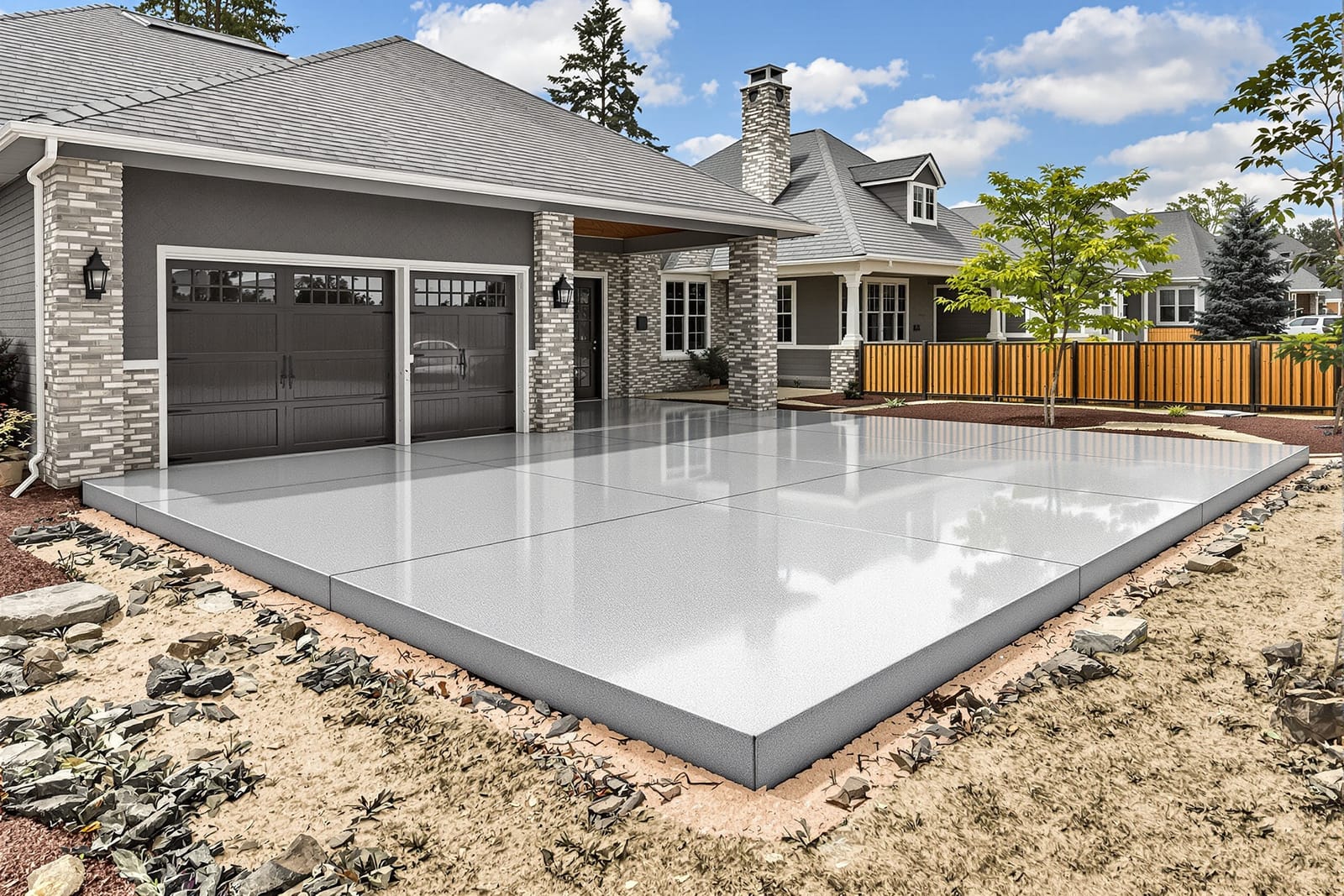
Get durable, level commercial concrete slabs in Charlotte, NC for warehouses, shops, and loading areas. We place and finish concrete flatwork designed for heavy loads and equipment traffic. From interior floor slabs to exterior truck aprons, our team delivers smooth, properly jointed surfaces that perform under pressure.
Precision Concrete Charlotte provides professional commercial concrete slab throughout Charlotte, NC, North Carolina and the surrounding area. Our licensed, insured crew delivers safe, clean, on-time work with a free estimate before anything begins. Call (980) 325-3571 or request your free quote.
Commercial Concrete Slabs & Flatwork in Charlotte, Built for Heavy Use
If you run a business in Charlotte, you already know your slab is not just a floor. It is supporting forklifts, pallet racking, delivery trucks, commercial kitchens, or customer traffic all day. At Precision Concrete Charlotte, our commercial concrete slab projects are built around how you actually use the space, not a one size fits all approach.
We start with a walk through of your site and a conversation about what will be happening on the slab. For example, a light duty retail floor that mainly sees foot traffic and shopping carts is very different from a warehouse bay where 12,000 pound forklifts turn all day. We ask about future plans too, such as if you expect to add heavier equipment in the next few years, because it is always cheaper to build for that now than to tear out and thicken a slab later.
In the Charlotte area, soils can change a lot even within a single property. We often see a mix of fill dirt, clay pockets, and compacted stone where old structures used to be. Our crews check existing subgrade conditions and, if needed, coordinate with geotechnical testing so we are not guessing. That subgrade work is where long term performance is really won or lost. A good looking slab poured on poorly compacted soil will crack and settle no matter who finishes it.
How We Design and Build a Commercial Concrete Slab That Holds Up
Once we understand your use, we size the slab thickness, reinforcement, and joint layout. For most commercial projects in Charlotte, slab thickness ranges from 4 to 8 inches. Light commercial spaces might be 4 to 5 inches with fiber reinforcement, while loading docks, dumpster pads, and warehouse drive lanes usually need 6 inches or more with rebar or welded wire mesh. For very heavy racks or machine pads, we may spec isolated thickened sections or structural slabs per engineer design.
Before any concrete shows up, we focus on the base. We typically use compacted ABC stone or similar graded aggregate. It is brought up in lifts and compacted with a plate tamper or roller with density checked as needed, especially for larger buildings. In Charlotte, we pay close attention to wet areas, because clay can hold water and soften the base. Where drainage is a concern, we add underdrains or extra stone to keep water from pumping under the slab.
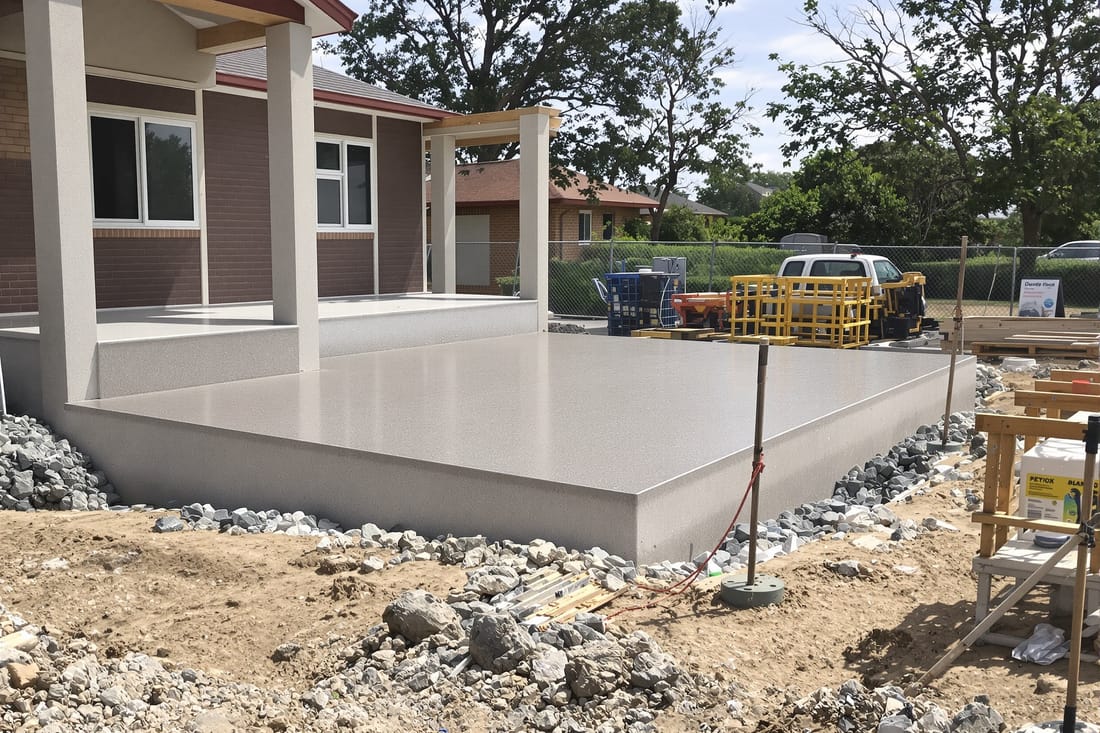
Formwork is set to laser level so finished elevations match door thresholds, existing floors, and ADA requirements. At this stage we also lay out vapor barriers under interior slabs, sleeves for plumbing or electrical conduit, and thickened edges where masonry walls or columns will bear. Getting this right avoids saw cutting and patching later.
Concrete mix design is another big decision. For commercial slabs we commonly use 4,000 psi or 4,500 psi mixes with a low water cement ratio and, when appropriate, air entrainment for exterior flatwork that will see freezing, deicing salts, or snow removal. For large pours in hot Charlotte summers, we may request retarding admixtures or use early morning placements to control set time and reduce the risk of plastic shrinkage cracking.
Flatwork Finishing Options: From Warehouse Floors to Exterior Pavement
Not every commercial concrete slab needs the same finish. Precision Concrete Charlotte will walk you through realistic options that match function, budget, and maintenance expectations.
Interior warehouse and industrial floors typically get a hard troweled finish that is smooth and dense. This helps forklifts roll more efficiently and reduces dusting. For higher end retail or office spaces, some clients choose to polish the concrete after it cures. Polished concrete can provide a clean, reflective look that is easy to maintain without floor coverings, but it requires proper slab flatness and a mix design that works with polishing.
Exterior commercial flatwork around Charlotte includes sidewalks, dumpster pads, loading aprons, equipment pads, and drive lanes. Here, slip resistance and durability matter more than appearance alone. We usually recommend a broom finish that creates fine traction lines. In high traffic plazas or entryways, clients sometimes combine broomed main areas with decorative borders or sawcut patterns to break up large slabs.
For areas exposed to oils, grease, or food service waste, we can install slabs with a slight slope to trench or area drains, plus integral curbs or berms to contain spills. In breweries or food processing facilities, we coordinate with coatings contractors when the concrete will receive an epoxy or urethane topping so the surface profile and cure schedule line up with their requirements.
Control joints and construction joints are another key part of flatwork performance. We plan joint spacing based on slab thickness and panel size, typically following a rule of thumb that the distance between joints in feet should not exceed 2 to 3 times the slab thickness in inches. Joints are sawcut soon after finishing once the concrete has gained enough strength to avoid raveling, which helps control where shrinkage cracks occur.
What Drives the Cost of a Commercial Concrete Slab in Charlotte
Business owners often ask why two slabs that look similar on paper can have different prices. The answer usually comes down to subgrade conditions, thickness and reinforcement, access, and schedule.
Subgrade prep is a major variable in the Charlotte market, especially on older commercial sites or redeveloped parcels. If we find deep soft spots, undocumented fill, or old foundations, extra excavation and stone are needed to get a stable base. We always explain these conditions with photos and clear change orders, because no one likes surprises.
Concrete thickness and reinforcement type directly affect material cost and labor. A 4 inch broom finished sidewalk around a strip center is relatively straightforward. A 7 inch thick, doweled loading dock slab with rebar grid, vapor barrier, and integral curb is a different level of work. When loads or building codes require an engineered slab, we coordinate closely with your structural engineer to price the specified details accurately.
Access and logistics matter too. If a site allows us to set up pump trucks close to the pour area and the ready mix plant is nearby, production is efficient. If concrete has to be moved long distances with buggies because the site is tight or active, that adds labor. Downtown Charlotte and infill projects often involve night or off hour pours to reduce disruption, which can increase cost due to overtime and lighting.
Timeline is another factor. Accelerated schedules that require high early strength mixes or multiple mobilizations can cost more upfront, but sometimes they save the project money overall by keeping other trades moving. Precision Concrete Charlotte will outline options, like whether it makes sense to pour in larger phases or use different mixes, so you can choose what fits your budget and schedule.
Common Problems We Prevent and How to Hire the Right Contractor
Most of the headaches we are called to fix on commercial slabs in Charlotte could have been avoided with proper planning and execution. The big three issues are cracking, settlement, and surface failure.
All concrete cracks to some degree, but random, wide cracks usually come from poor joint layout, bad curing, or movement in the base. We reduce this risk by designing a realistic joint pattern, sawcutting at the right time, and curing properly. For many commercial slabs we use curing compounds right after finishing, or for higher end floors we may recommend wet curing or temporary coverings to control moisture loss.
Settlement and rocking slabs often trace back to un-compacted fill or trapped water under the slab. We pay attention to drainage around the slab, especially near downspouts, dumpster enclosures, and drive entrances. When needed, we use dowels or keyways at joints to help slabs move uniformly rather than separately.
Surface scaling, dusting, or spalling often shows up on exterior commercial flatwork that sees deicing salts or heavy truck traffic, such as at gas stations, banks, and retail centers. This is why we match the mix design and air content to the exposure and avoid overworking the surface with water during finishing. We also give clear instructions on when you can put traffic on the slab and how to treat it during the first winter.
When you are comparing contractors, ask about more than just price. Ask what slab thickness and reinforcement they are actually including, how they handle subgrade testing and compaction, and what their plan is for joints and curing. Ask for examples of similar commercial projects in the Charlotte area, not just residential work. At Precision Concrete Charlotte, we are happy to walk you through past jobs such as warehouse floors, auto bays, and retail centers so you can see how our commercial concrete slab work performs in real use over time.