Home › Sitework and Structural Concrete
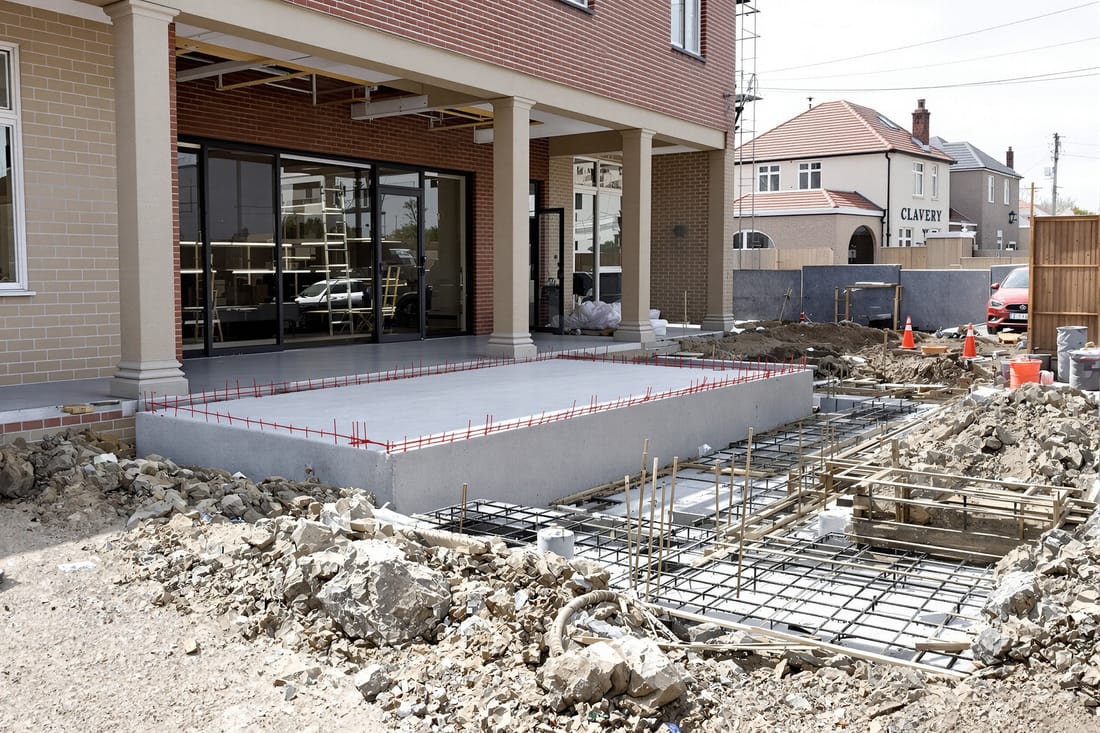
Complete your project with reliable sitework and structural concrete in Charlotte, NC for commercial and industrial developments. We install concrete footings, walls, piers, pedestals, and equipment pads aligned with your engineering plans. Our team coordinates excavation, reinforcement, and concrete placement to keep structural work on track.
Precision Concrete Charlotte provides professional structural concrete throughout Charlotte, NC, North Carolina and the surrounding area. Our licensed, insured crew delivers safe, clean, on-time work with a free estimate before anything begins. Call (980) 325-3571 or request your free quote.
Sitework and structural concrete for Charlotte projects that last
Sitework and structural concrete are what make everything else on your property work properly. If the grading is off or the concrete structure is underbuilt, you end up with cracks, standing water, settlement, or doors and windows that stop closing right. Precision Concrete Charlotte focuses on building the base and the structure correctly for Charlotte soils and weather so you do not have to fix it again in a few years.
In our area, clay soils shrink and swell, summer storms drop a lot of water in a short time, and many lots have been mass graded by developers before a home or building is ever started. That combination means sitework and structural concrete are not just a checkbox. They decide how well your driveway, slabs, footing systems, and walls stand up to movement and moisture over time.
We work with general contractors, property managers, and owners on new builds, additions, and structural repairs. Whether you need a slab for a shop, a mat foundation for equipment, or new footings tied into an existing structure, the goal is the same: a strong, properly detailed concrete system that matches the loads and the soil it sits on.
How we approach sitework on Charlotte lots
Good structural concrete starts with proper sitework. Precision Concrete Charlotte begins with a ground assessment, not just a quick glance. We look at existing grades, drainage paths, soil conditions, and any nearby structures or utilities that might affect excavation.
Typical sitework steps include:
1) Layout and elevations. We verify control points and elevations with the survey or plans so the finish grade will move water away from buildings instead of toward them.
2) Clearing and stripping. We remove vegetation, roots, topsoil, and any unsuitable fill. Organic material left under a slab or footing is a common cause of settlement, so we take it out to a depth that will give you a reliable base.
3) Cut, fill, and compaction. We bring the site to design subgrade, then compact in thin lifts with the right equipment for the soil type. In Charlotte, that often means managing red clay that wants to hold moisture. We time our work so compaction is done at the right moisture content rather than just rolling whatever is there.
4) Drainage and utilities coordination. Before concrete goes in, we coordinate with plumbers, electricians, and site utilities to keep trenches out of footing zones where possible, or to backfill and compact them correctly when they have to cross under slabs.
5) Subbase preparation. For slabs, we often use a compacted stone base over the native soil, then a vapor barrier where required. In garages and interior slabs, we pay attention to transitions to driveways and entries so there are no awkward steps or thin, crack prone edges.
Handling drainage correctly during sitework is one of the key differences between a project that works year after year and one that constantly fights water. We set slopes and swales so water leaves the structure quickly, not toward foundations or neighbor properties.
Structural concrete elements we build
Structural concrete covers all the parts that actually carry load. Precision Concrete Charlotte installs foundations and slabs that are designed to handle both the weight of the structure and the ground conditions on your specific site.
Common structural concrete work we perform in Charlotte includes:
• Footings and foundations. Continuous wall footings, spread footings, thickened edge slabs, and grade beams. We follow engineered dimensions and reinforcement schedules instead of guessing. On sloped lots, we use stepped footings so foundations stay on solid soil, not on fill that will move.
• Slabs on grade. House slabs, garage slabs, shop floors, and commercial slabs. We choose reinforcement methods (rebar grids, welded wire mesh, or fiber reinforcement) based on slab size, load requirements, and expected traffic like vehicles or equipment.
• Structural walls and piers. Retaining walls that hold back soil, foundation walls, and equipment pads or piers for heavy loads. Many Charlotte properties need retaining walls along driveways or walkout basements. We pay attention to wall thickness, steel layout, and drainage behind the wall so hydrostatic pressure does not cause bowing or cracking.
• Structural repairs and tie ins. When you add onto an existing building, we drill and epoxy rebar into the old footing or slab so the new concrete acts with the old instead of separating and settling differently. For repairs, we remove unsound concrete, clean and prepare the existing surfaces, and install new reinforcement before placing new concrete.
Instead of a one size fits all approach, we match each element to actual loads: vehicles, storage racks, machines, or multi story framing. That is how you avoid overbuilding where it is not needed and underbuilding where it matters most.
Materials, reinforcement, and placement methods
On structural concrete, the mix design and reinforcement choices are critical. Precision Concrete Charlotte uses mixes with appropriate compressive strength for the application, typically 3,000 to 4,000 psi or higher for structural elements. We consider exposure as well: exterior work that will see deicing salts or constant moisture may call for air entrainment and specific admixtures.
For reinforcement, we follow plans or, when we are working on smaller design build projects, we size and place steel based on known loading patterns. That can mean #4 or #5 rebar at specified spacing in footings and walls, dowels at construction joints, and concentrated steel under point loads such as columns or heavily loaded posts.
Before any concrete is placed, we build forms that hold dimensions and elevations accurately. We check rebar clearances from soil and form faces to meet cover requirements, then call for inspections where required by Mecklenburg County or the local jurisdiction.
Concrete placement is scheduled with the weather in mind. In summer heat, we plan for shorter travel times from the plant, have finishing crews and tools ready, and may use set controlling admixtures if the pour is large or complex. In colder weather, we protect early age concrete from freezing and sometimes adjust mix temperatures or curing methods.
Finishing and curing are not cosmetic details, they affect strength and durability. For structural slabs, we focus on a flat, properly jointed surface rather than a glossy look that can lead to scaling if overworked with water. We cut or form joints at calculated spacing to control where shrinkage cracks form, and we apply curing methods that keep the slab from drying too fast, which can weaken the surface layer.
What drives cost and how to control it without cutting corners
Structural concrete pricing in Charlotte is driven by more than just square footage. Precision Concrete Charlotte walks clients through the real cost factors so you can decide where to invest and where you might be able to save without sacrificing performance.
Key cost drivers include:
• Excavation and access. Tight backyards, steep driveways, or the need for hand work instead of machinery add labor time. If spoils must be hauled off instead of spread on site, disposal costs go up.
• Soil conditions. Soft, wet, or poorly compacted soils may require undercutting and replacement with stone, thicker footings, or wider foundations. Sometimes an engineer will specify special measures like piers or grade beams when fill is too deep.
• Reinforcement and thickness. Heavier loads or poor soils demand more steel and thicker sections. For example, a light duty shed slab is very different from a shop that will support lifts or heavy equipment.
• Formwork complexity. Curved walls, multiple steps, and unusual shapes take longer to form and strip than straight runs and simple rectangles.
• Access to ready mix and pump trucks. Some Charlotte neighborhoods restrict large trucks at certain hours, and some sites require a concrete pump. Pumps speed placement but add a separate line item.
If we see that a design is more robust than the actual use requires, we will talk through options with you and your designer or engineer, such as reducing slab thickness in low load areas or adjusting reinforcement patterns. The goal is to keep the structure safe and compliant while avoiding unnecessary material and labor.
What Charlotte owners should check before hiring a concrete contractor
Structural concrete is not the place to gamble on the lowest bid. When you are comparing contractors in Charlotte, there are a few specific things to verify before you sign anything.
Ask how they handle compaction and subbase prep. If the answer is simply that they "roll it and pour," that is a red flag. You want written notes or a clear description of how they test or confirm compaction, what base material they use, and how thick it will be.
Request details on reinforcement and jointing. A serious contractor will tell you bar sizes and spacing, mesh or fiber choices, and joint layouts instead of saying they will "put in some rebar." For structural work, these details belong in your proposal or scope, not just in conversation.
Confirm they are familiar with local inspection and code requirements, including footing inspections, vapor barriers where required, and rebar placement checks. In Mecklenburg County and surrounding jurisdictions, failed inspections can delay framing and trigger costly rework.
Finally, look at past projects similar to yours, not just decorative or flatwork photos. Structural concrete for a crawlspace conversion, retaining wall, or addition footing has different demands than a basic sidewalk. Precision Concrete Charlotte is open about how we build, what materials we use, and why, so you know up front what is going into the part of your project you will not see once it is covered but that everything else depends on.