Home › Concrete Slab Installation
Get a strong, level concrete slab in Charlotte, NC for your house, shed, patio, or garage. We handle excavation, base prep, reinforcement, and proper slab thickness for your project. From small shed slabs to full concrete floor slabs, we pour flat, durable surfaces ready for building or finishing.
Precision Concrete Charlotte provides professional concrete slab throughout Charlotte, NC, North Carolina and the surrounding area. Our licensed, insured crew delivers safe, clean, on-time work with a free estimate before anything begins. Call (980) 325-3571 or request your free quote.
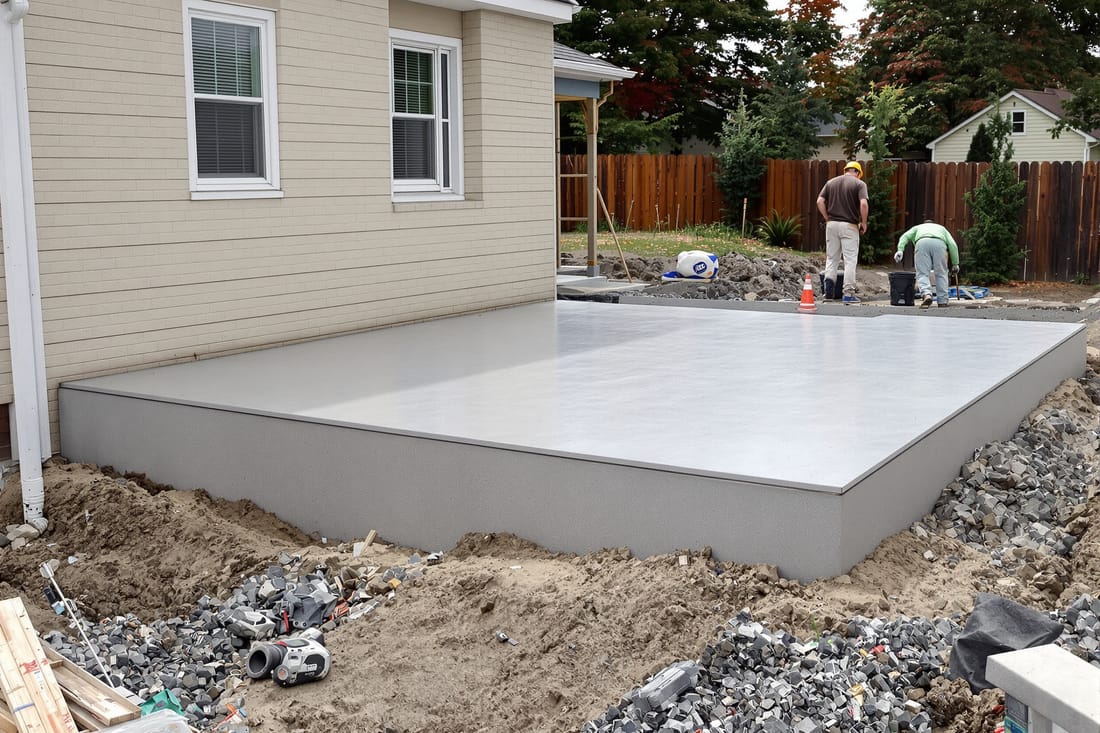
Concrete slab installation in Charlotte that is actually built to last
When you hire Precision Concrete Charlotte for a concrete slab, you are not just getting a flat surface. You are getting a foundation that has to deal with clay soils, summer heat, and plenty of thunderstorms. Whether you need a slab for a garage, room addition, patio, shed, or small commercial use, we start by asking how you plan to use the space, what will sit on it, and how long you plan to be there. The answers change the slab thickness, reinforcement, and even the concrete mix.
In the Charlotte area, our soils can shift when they get wet or dry out. That is why we never treat two yards the same. We look at drainage, slope, existing structures, and access for equipment. For heavier loads (like a workshop with a lift or storage for equipment), we will often recommend a thicker slab and stronger reinforcement than a basic patio. For outdoor living spaces, we might plan for decorative finishes or saw cuts that line up with your future hardscaping.
Precision Concrete Charlotte takes care of everything from layout and forming to finishing and cleanup. You know where we will be, when we will show up, and what we are pouring each day. Our goal is to leave you with a slab that is level, properly reinforced, and set up so you are not fighting cracks, settling, or standing water two summers from now.
How we install a concrete slab, step by step
A good concrete slab starts before the truck ever shows up. First, we visit your property and measure the area, check elevations, and look for access and drainage issues. We mark out the slab with paint and stakes so you can see the footprint and make adjustments before any digging starts.
Next, we handle excavation and grading. For most residential slabs in Charlotte, we dig down to remove soft material and organic topsoil, then compact the subgrade with a plate compactor. On sites with more expansive clay or previous fill dirt, we may bring in a more stable stone base. A compacted layer of crushed stone or gravel (often around 4 inches for typical residential work, more for heavier use) gives the slab a firm, well drained foundation.
We then set the concrete forms, usually using straight lumber or metal forms, and secure them with stakes. We double check elevations with a level so the finished slab will have the proper slope away from your home or towards a drain. At this stage we also plan the control joints so they line up neatly and help control cracking.
After the forms are set, we install reinforcement. For many Charlotte homeowners, this means steel rebar placed in a grid pattern or welded wire mesh. For garages, driveways, and heavy use areas, we often suggest #3 or #4 rebar tied on a regular pattern, supported on chairs so it sits inside the lower third of the slab, not on the ground. In some cases we combine steel with fiber reinforced concrete for extra crack resistance.
On pour day, we schedule the concrete truck to arrive once the site is ready. We typically use a 3,000 to 4,000 PSI mix for residential slabs, and can adjust for air entrainment or additives depending on the season and use. We place the concrete starting at the farthest point and work toward the access, spread it evenly, then screed it to the planned elevation. After screeding, we bull float to smooth the surface and bring paste up, then allow it to set to the right firmness for finishing.
Finishing methods depend on your needs. For interior slabs that will receive flooring, we usually trowel to a smooth, level surface. For exterior patios and walkways, we often use a broom finish to add traction, which matters when those sudden Carolina showers hit. Before the concrete fully sets, we cut control joints at planned locations and depths to help manage natural cracking. Finally, we clean up the site, remove excess material, and confirm curing instructions with you before we leave.
Local conditions in Charlotte that affect your concrete slab
Charlotte’s weather and soil are a big reason to hire a contractor who works here all the time. Our clay soils expand when wet and shrink when dry, which means a slab that is not properly supported or reinforced can settle unevenly or crack. At Precision Concrete Charlotte, we design slabs around this reality with attention to subgrade preparation and moisture management.
Rain patterns also matter. Sudden storms can hit on pour day or shortly after, and a poorly timed rain can ruin a finish or weaken the surface. We schedule pours with the forecast in mind, bring plastic sheeting to protect fresh concrete if conditions change, and avoid finishing practices that trap bleed water on humid summer days. In colder snaps, we adjust mix and timing to protect against surface damage.
Drainage around the slab is just as important as what is under it. We set elevations so water runs away from your foundation and does not pool on the slab. For areas near property lines or tight spaces between homes, we may suggest small grading adjustments, French drains, or surface drains before pouring. Addressing drainage now is much cheaper than repairing a cracked, heaving slab later.
Local building codes and permitting also play a role. For many structural slabs in Charlotte and Mecklenburg County, permits and inspections may be required, especially for room additions, garages, and certain commercial applications. Our team can help you understand if your project needs a permit, what thickness and reinforcement the inspector expects, and how inspections fit into the schedule. This local code knowledge keeps projects from being delayed over avoidable details.
Because we work across Charlotte and nearby towns, we are familiar with common neighborhood issues. For example, infill lots in older neighborhoods may have hidden debris underground from previous structures, which affects excavation. Newer subdivisions often have compacted builder fill that drains differently than native soil. We take these patterns into account when planning your slab so you are not surprised after the concrete is in place.
Cost factors for concrete slabs and how to plan your budget
Concrete slab pricing in Charlotte is not one size fits all. At Precision Concrete Charlotte, we walk you through the main cost drivers so there are no surprises. The most obvious factor is size, since more square footage means more concrete, reinforcement, and labor. Thickness is just as important. A 6 inch slab for a heavy garage or shop uses half again as much concrete as a 4 inch patio, and usually requires more steel.
Access and site conditions can change the cost too. If we can back a truck close to the forms, the job is faster and requires less labor. If the area is behind a fence, down a hill, or otherwise hard to reach, we may need wheelbarrow runs, a buggy, or even a concrete pump. That extra equipment and time shows in the final price. Similarly, removing old concrete, trees, or stumps adds to the prep work but is necessary for a stable slab.
Reinforcement choices and finishes are the other big variables. Basic welded wire mesh is often the most economical option, but many homeowners choose deformed rebar for better long term performance, especially in garages and sheds. Decorative finishes like stamped patterns, integral color, or exposed aggregate add cost, but can be a good investment for patios and outdoor living areas where appearance matters.
We also help you think about the long term. Saving a small amount by reducing thickness or reinforcement can create bigger repair costs later, especially in our local soil conditions. Our estimates clearly show what is included, so if you compare bids, you can make sure you are looking at the same slab thickness, steel layout, and PSI rating. A cheaper quote might simply mean less concrete or steel, not a better deal.
If you have a target budget in mind, tell us up front. We can suggest small layout changes, such as adjusting the slab footprint or separating an area into two pours, to keep costs under control while still delivering a strong, functional slab. Transparency about scope, materials, and site conditions is how we avoid change orders and keep your project on track.
What to expect when you work with Precision Concrete Charlotte
From the first call, our goal is to make the concrete slab process straightforward and low stress. We usually start with a short phone conversation about what you are building and where, then schedule a site visit. During that visit we measure, look at soil and drainage, talk about your plans for the space, and discuss thickness, reinforcement, and finish options that fit your needs.
After the visit, we provide a written estimate that outlines the scope, materials, and any assumptions about access or prep work. If permits are needed, we can assist with that process or coordinate with your builder. Once you are ready to move forward, we set a tentative pour date that fits both the weather and your schedule, and let you know the expected duration from prep to final cleanup.
On prep day, our crew arrives on time, goes over the plan one more time, and sets up the work area. We protect nearby landscaping as needed and keep the site organized as forms, base stone, and steel go in. You will see us checking elevations and slopes repeatedly so the finished slab drains correctly and lines up with door thresholds or existing concrete.
On pour day, you can expect more activity, but we keep it coordinated. Someone from Precision Concrete Charlotte is always on site to manage the timing of the truck, oversee placement and finishing, and answer your questions. Once the finishing is complete, we put up simple barriers or caution tape to keep people and pets off the slab while it cures.
We walk you through curing instructions, such as how long to wait before walking, placing furniture, or driving on the slab. For many standard slabs, light foot traffic is fine after about 24 hours, but vehicle traffic usually waits several days, with full design strength reached around 28 days. We can also discuss sealing options to protect the surface from staining and weather.
After completion, we are available for follow up questions about cutting in anchors, adding framing on top of the slab, or planning future expansions. Many of our concrete slab customers in Charlotte call us back when they are ready to add driveways, walkways, or additional pads, because they know exactly what they are going to get: clear communication, solid work, and a slab that does what it is supposed to do.